

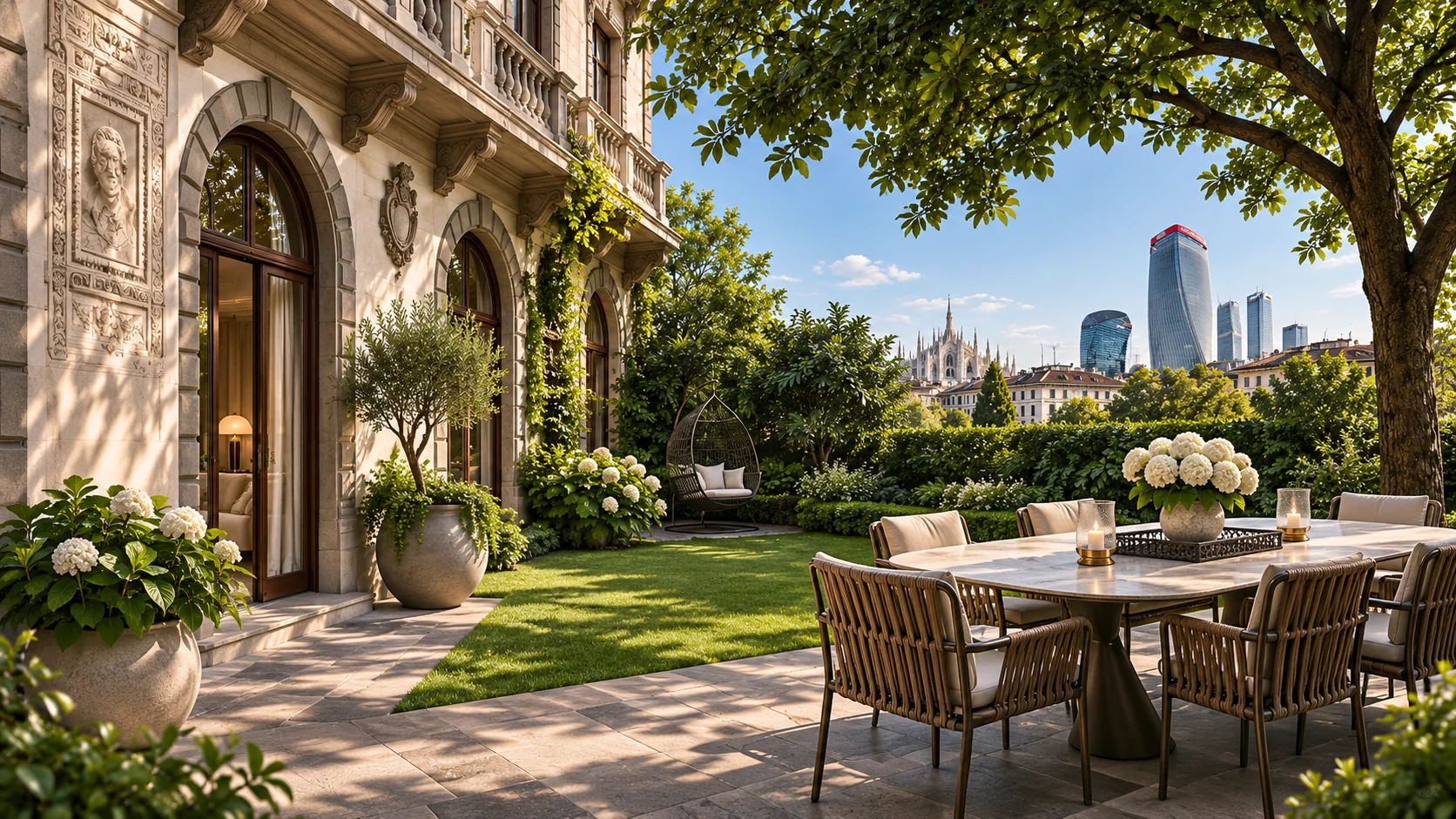
The choice in luxury real estate between a newly built property and a period property appeals to completely different buyer profiles and lifestyles, although in both cases these are investments associated with high returns and exclusivity.
1. Newly Built Properties
The main purchase drivers are efficiency, technological comfort and operational convenience.
a) Sustainability and Energy Efficiency: High energy ratings (Class A4), sustainable building systems (geothermal, photovoltaic) and management/maintenance costs kept to a minimum during the first few years.
b) Advanced Home Automation: Integrated home management (security, climate control, lighting, scenarios) built in from the outset.
c) Condominium Services and Amenities (Residences): 24/7 concierge, private gym, SPA, swimming pool, meeting rooms, smart-working areas and electric-car garages integrated into the building.
d) Contemporary Layout and Customisation: Optimised interiors (open spaces, large windows, liveable terraces) and the possibility of choosing finishes and materials directly from the plans before delivery.
e) Turnkey: The property is ready to move into, removing the stress or uncertainties associated with lengthy and complex renovation work.
2. Period Properties (Historic & Heritage Real Estate)
Here the motivation is driven by uniqueness, status and long-term asset value.
a) Prestige and Unique Architectural Details: Irreplaceable historic elements such as frescoed ceilings, period stuccowork, interior heights exceeding 3.5 metres and original floors (herringbone parquet, Venetian terrazzo).
b) Irreplaceable Prime Location: Situated in the heart of historic centres, on the most iconic streets or in established high-end neighbourhoods where there is no longer space for new development.
c) Iconic Value and Value Retention: As unique and non-replicable pieces, they tend to preserve their asset value or appreciate over the long term regardless of market cycles.
d) Custom Restoration Flexibility: The opportunity to combine classical architecture with ultra-modern interiors to create a unique contrast (high-end interior design).
e) The Charm of "History": The desire to own an asset that tells a story and offers a warm, noble and distinctive atmosphere that a new build struggles to replicate.